


Oracle 23AI is undoubtedly packed with a range of both small and significant features. Every now and then, I stumble upon some standout additions, and this time, it’s the improvements in AWR reports that caught my attention. One of the key enhancements is the inclusion of more replication-related information captured and presented in these reports.
With this new update, AWR queries and reports are now streamlined and enhanced, offering a simplified yet detailed view of the replication process. This makes troubleshooting replication performance issues much easier. You can now categorize problems into workload-related issues, database-side misconfigurations (such as slow replication SQL due to missing indexes or incorrect database parameter settings), or performance bottlenecks either within the database or in Oracle GoldenGate processes.
The enhanced replication section includes a more comprehensive “Replication System Resource Usage” area. This shows the system resource consumption for all Oracle GoldenGate replication processes, whether they are foreground or background, and breaks it down for each Extract and Replicat process.
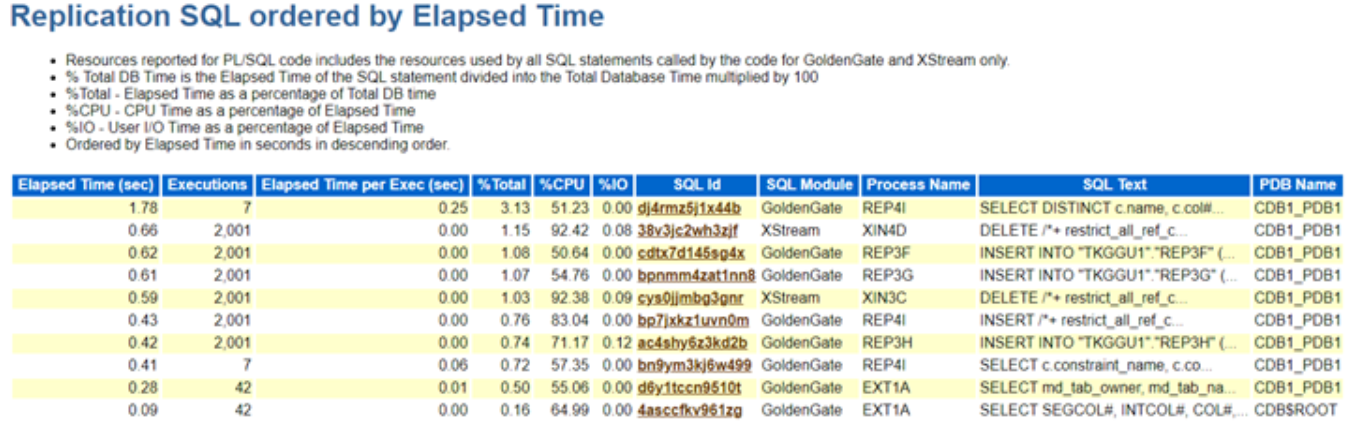
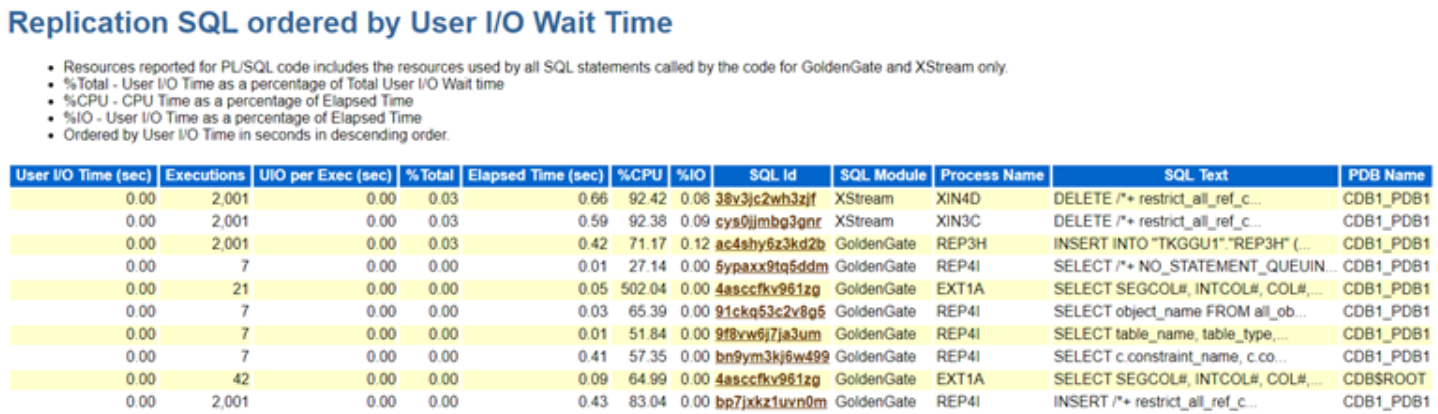
Additionally, a dedicated section for replication-related Top SQL statistics has been added, making it much easier to identify performance issues tied to specific SQL statements.
There’s also a separate section for top wait events related to replication processes, enabling faster identification and resolution of replication-related performance bottlenecks.
Lastly, the replication-related sections have been reorganized to present statistics by individual Extracts and different Replicat types, offering clearer insights into replication performance.
These enhancements are really great when it comes to monitoring and improving the performance of replication processes.
Replication System Resource Usage:
Metrics for Oracle GoldenGate replication now include detailed information such as the process name, type, and the number of sessions for each sub-component. Performance statistics are categorized based on the specific functionality of these sub-components and grouped by the process name. This enhancement allows for more granular monitoring of resource usage, giving visibility into the performance of each Extract and Replicat process, along with their individual sub-components.

Replication Wait Events:
There is a dedicated section within the report for replication related wait events (both foreground and background types).

Replication Top SQLs: This highlights the SQL statements executed by various replication processes, organized by key performance metrics such as Elapsed Time, CPU Time, and Execution Count. These sections in the Top SQL report provide a detailed breakdown, allowing administrators to quickly identify the most resource-intensive SQL queries impacting replication performance.
In addition, the replication process name is included for each SQL statement, making it easy to trace which process—whether Extract or Replicat—is responsible for executing the query. This level of granularity helps streamline troubleshooting efforts, as it enables pinpointing of inefficient SQL statements and their impact on replication. The inclusion of these metrics ensures that administrators have the necessary visibility to optimize SQL execution within replication processes, leading to improved overall system performance.

Oracle GoldenGate Extract Performance Metrics : This section explains more in Extract and Capture processes. It provides some really valuable information like ..
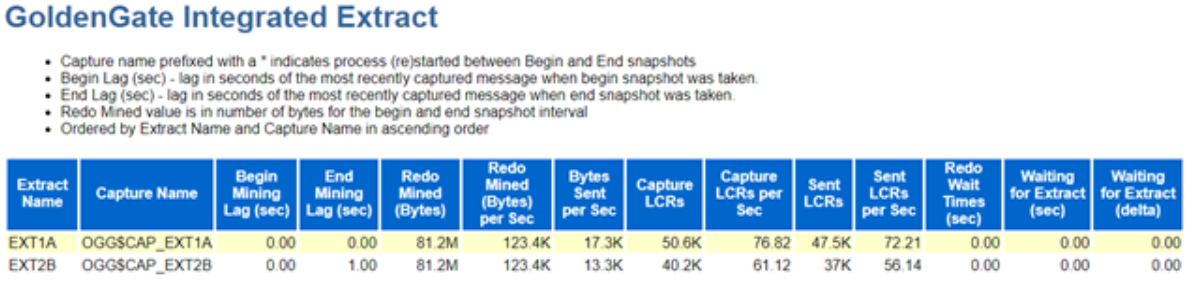
- Lag (in seconds) derived by the time when the most recent LCR was created and received (measured both at the beginning and end)
- The amount of redo data mined (in bytes).
- Redo Mined Rate
- Number of bytes sent by the Capture process to the Extract process since the last time the Extract process attached to the Capture process.
- Number of LCRs delivered to the Capture from Logminer …. and much more … ….
Oracle GoldenGate Integrated Replicat:

Oracle GoldenGate Replicat: This section presents comprehensive performance statistics for Oracle GoldenGate’s classic, coordinated, and parallel Replicat processes. The SQL operation statistics are aggregated and displayed for each individual Replicat process, providing an overall view of their performance.

Hope It Helped!
Prashant Dixit
 Tales From A Lazy Fat DBA